Fort Worth, Texas — August 05, 2026
How Facility Teams Can Prepare Before the Next Hurricane
Hurricanes do not just test buildings. They also test the plans, people and processes responsible for protecting them.
For facility teams, effective hurricane preparedness begins well before a storm forms or appears in the forecast. Waiting until watches and warnings are issued can leave teams with limited time to address property vulnerabilities, coordinate responsibilities and gather important documentation.
Certified Broadcast Meteorologist and FEMA-certified instructor Cheryl Nelson recommends taking a proactive approach to hurricane planning. By inspecting the property, establishing a communication plan and documenting assets in advance, facility teams can improve their ability to respond when severe weather threatens.
Watch: How Facility Teams Can Prepare Before the Next Hurricane
Certified Broadcast Meteorologist and FEMA-certified instructor Cheryl Nelson shares practical steps facility teams can take to inspect their properties, strengthen communication plans and prepare before severe weather approaches.
Watch the full hurricane preparedness video on Inside Restoration & Recovery.
What Should Facility Teams Do Before a Hurricane?
Facility teams should prepare for hurricanes by:
- Inspecting the building and surrounding property
- Completing repairs before a storm approaches
- Securing items that could become flying debris
- Addressing damaged trees and overhanging limbs
- Creating an emergency communication plan
- Assigning roles and responsibilities
- Photographing the property and documenting assets
- Exchanging contact information with nearby businesses and neighbors
These actions can help reduce uncertainty and give facility teams a clearer plan to follow when conditions begin to deteriorate. Organizations should also consider developing a more comprehensive commercial disaster recovery plan before an emergency occurs.
1. Walk and Inspect the Property
One of the most important hurricane preparedness steps is conducting a thorough inspection of the property before hurricane season intensifies.
Walk around the building and look for existing damage or maintenance issues that could become more serious during high winds and heavy rain.
The inspection should include:
- The roof and visible roofing materials
- Missing or damaged shingles
- Existing leaks
- Loose siding
- Damaged overhangs
- Outdoor furniture
- Trash cans and unsecured equipment
- Dead trees
- Broken or overhanging tree limbs
- Other objects that could become airborne
Even a relatively small maintenance issue can become more difficult to address once a storm is approaching. Completing repairs in advance gives the facility team more time to focus on immediate storm preparations later.
What can become flying debris during a hurricane?
Outdoor furniture, trash cans, loose building materials, equipment and other unsecured objects can become flying debris during severe weather. These items should be secured, relocated or removed before conditions worsen.
2. Address Repairs Before a Storm Forms
Preparedness should not begin when a hurricane is already in the forecast.
If an inspection reveals a damaged roof, loose siding, hazardous tree limbs or another concern, address it as soon as possible. Contractors and internal maintenance teams may become more difficult to schedule as a storm approaches.
Taking action early can also prevent facility teams from having to make rushed decisions while simultaneously managing employee safety, operational needs and emergency communications.
The goal is to identify vulnerabilities during normal operating conditions, when the organization has more time and resources available to correct them.
3. Create a Hurricane Communication Plan
A hurricane communication plan helps employees, facility leaders and other stakeholders understand what they are responsible for before, during and after a storm.
Every member of the response team should know:
- Their assigned role
- Who they report to
- Who has decision-making authority
- How updates will be communicated
- Who should be contacted if normal communication channels are unavailable
Create and maintain a contact list that includes the people who may need to coordinate during an emergency. Make sure the list is accessible even if employees cannot enter the building or access their usual systems.
Contact information should be reviewed regularly so outdated names, roles and phone numbers can be corrected before an emergency occurs. Facility leaders can find additional guidance in our article about staying informed and connected during a hurricane.
Why is a hurricane communication plan important?
Once hurricane watches and warnings are issued, time becomes a valuable and limited resource. A documented communication plan reduces confusion and allows the team to focus on executing previously assigned responsibilities.
4. Photograph the Property and Document Assets
Facility teams should take current photographs of the building, property and important assets before a storm.
Photographs can provide a reference point for understanding the condition of the property before damage occurred. Maintain an updated inventory of significant equipment, contents and other items that may need to be referenced following a loss.
Documentation may include:
- Exterior photographs
- Interior photographs
- Roof and building-envelope conditions
- Major equipment
- Furniture and contents
- Serial numbers
- Asset descriptions
- Relevant purchase or maintenance records
Store copies of this documentation in a secure location that can be accessed even if the facility or its primary network is unavailable.
Why should facilities take pictures before a hurricane?
Pre-storm photographs and inventory records can help establish the property’s condition before the event and provide useful documentation when communicating with insurance representatives, restoration professionals and other stakeholders.
5. Connect With Neighboring Businesses and Properties
One frequently overlooked component of emergency planning is building relationships with the people and organizations located near the facility.
Exchange contact information with neighboring property managers, businesses and other relevant contacts. Following a disaster, the people already in the area may be among the first to notice damage, identify hazards or share important information.
Nearby organizations may be able to:
- Alert your team to visible damage
- Report unsafe conditions
- Share information about road or property access
- Coordinate around common hazards
- Provide assistance until emergency responders arrive
Facility preparedness is not limited to what happens inside the building. Strong community relationships can become an important part of the response process.
Do Not Wait for a Hurricane Warning to Prepare
When a hurricane watch or warning is issued, facility teams may already be running out of time.
At that point, local demand for supplies, contractors and emergency services may increase quickly. Employees may also be focused on preparing their own homes and families.
Completing inspections, repairs, documentation and communication planning in advance allows the organization to use the remaining time more effectively.
Preparedness is an ongoing process—not a last-minute checklist.
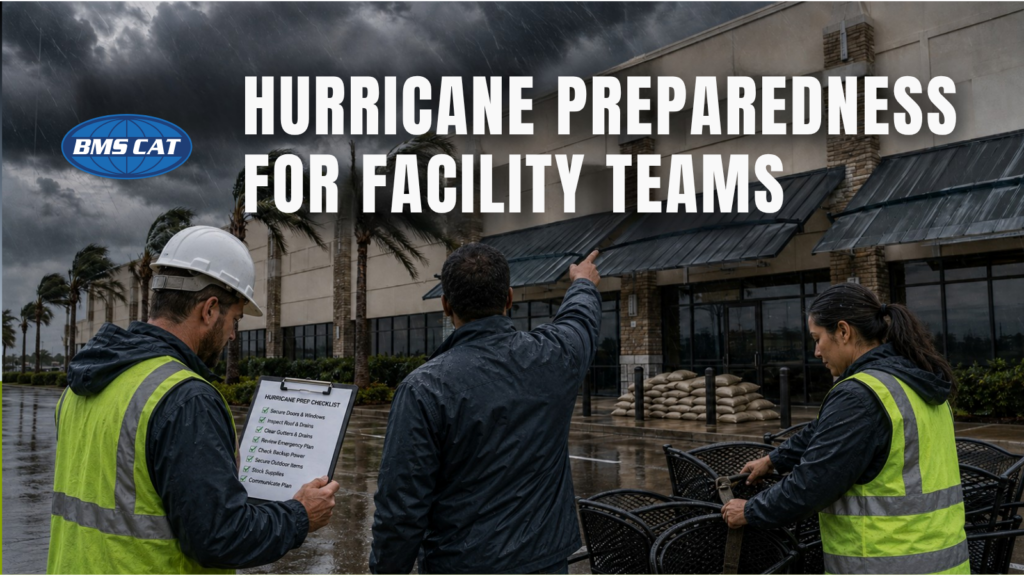
Hurricane Preparedness Checklist for Facility Teams
Use this checklist to evaluate your facility’s current level of readiness:
- Inspect the roof for missing materials, leaks and visible damage.
- Examine siding, overhangs and exterior building components.
- Identify outdoor objects that need to be secured or relocated.
- Trim hazardous tree limbs and address dead or damaged trees.
- Complete necessary repairs before severe weather approaches.
- Assign emergency roles and responsibilities.
- Update employee and stakeholder contact information.
- Establish primary and backup communication methods.
- Photograph the interior and exterior of the property.
- Update inventories of equipment, contents and important assets.
- Store documentation in an accessible, secure location.
- Exchange contact information with neighboring properties.
- Review and update the plan regularly.
Frequently Asked Questions About Hurricane Preparedness
When should facility teams begin preparing for hurricane season?
Facility teams should begin preparing before a storm forms. Property inspections, repairs, communication planning and documentation are easier to complete when a hurricane is not already approaching.
What should be included in a commercial hurricane preparedness plan?
A commercial hurricane preparedness plan should include property inspections, assigned responsibilities, emergency contact information, communication procedures, property documentation and steps for securing potential hazards.
What areas of a commercial property should be inspected?
Facility teams should inspect the roof, siding, overhangs, outdoor areas, trees and any objects that could become flying debris. Existing leaks and other needed repairs should also be identified.
Who should be included in the hurricane communication plan?
The plan should include facility leaders, employees with emergency responsibilities, decision-makers and other stakeholders who may need to communicate before, during or after the storm.
How often should a hurricane preparedness plan be reviewed?
The plan should be reviewed regularly and whenever there are changes to the facility, personnel, contact information or emergency responsibilities.
How can BMS CAT help facilities prepare for hurricanes?
The BMS CAT Priority Disaster Response Program helps organizations plan before a loss occurs. The process can include identifying potential threats, discussing organizational priorities, conducting a property walkthrough, establishing expectations and outlining emergency procedures.
Prepare Before the Next Storm
It only takes one hurricane to significantly affect a facility and the surrounding community.
Walking the property, correcting vulnerabilities, documenting assets and clarifying responsibilities now can help your team make better use of limited time when severe weather approaches.
Preparation cannot eliminate every risk, but it can help reduce confusion and give facility teams a more organized path forward.
Explore more videos, interviews and preparedness insights through Inside Restoration & Recovery.
To begin developing a plan for your organization, enroll in the Priority Disaster Response Program or contact BMS CAT. With locations across the United States, BMS CAT provides 24/7 support for commercial properties affected by hurricanes, flooding and other disasters.
About BMS CAT
BMS CAT is a trusted name in disaster recovery and restoration, offering nationwide service and local expertise. From emergency response and mitigation to full reconstruction, BMS CAT helps businesses and homeowners recover and rebuild after disasters of all sizes. Learn more at www.bmscat.com.